Heart in the right place
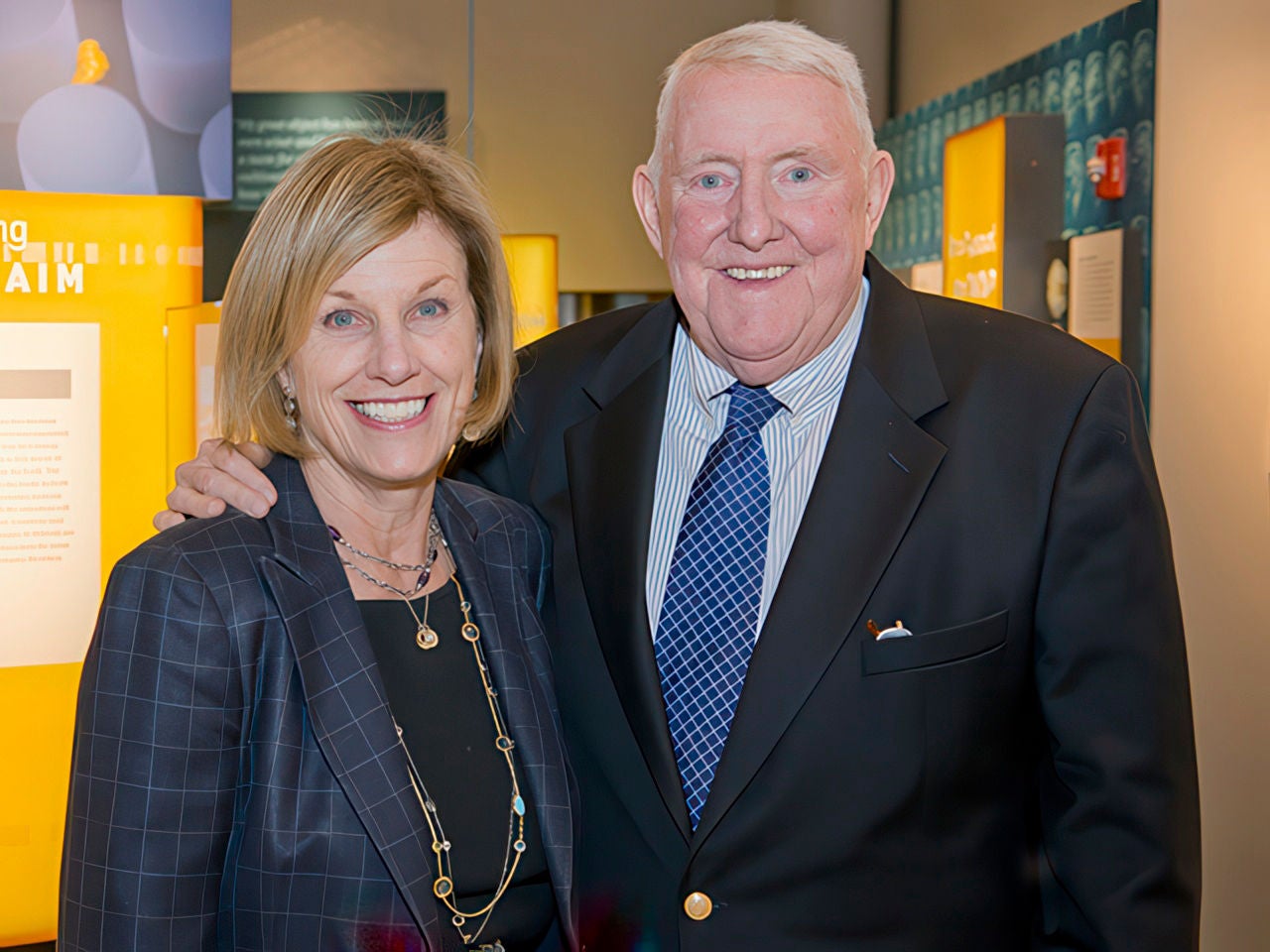
Building on a shared legacy of early heart disease discoveries, Mass General Brigham’s institutions have long stood at the forefront of heart and vascular care. In the 21st century, the pace of discovery has quickened with the introduction of genomics, targeted therapies, and advanced imaging methods. Mass General Brigham’s continued leadership is sustained by world-class care and research teams, their deep commitment to innovation and bettering outcomes for all patients, and the support of philanthropic partners like the Corrigan Minehan family and their Challenger Foundation. For almost 20 years, they have stepped forward time and again to help Mass General Brigham meet the moment in heart and vascular care.
As Mass General Brigham enters a visionary new era with the launch of the Heart and Vascular Institute, the Corrigan Minehan family — Elizabeth Corrigan, Cathy Minehan, and Karen Corrigan Tate — is rising to support this latest evolution in care and research with a gift of $20 million from their Challenger Foundation. The gift includes support for the new Linda Anne Barlow Intensive Care Unit for the Heart and Vascular Institute — now under construction in the New Balance Foundation Tower of the Phillip and Susan Ragon Building — and funds to establish the Corrigan-Minehan Endowed SPARK Awards for investigators studying cardiovascular disease.
“The advances in cardiovascular medicine over the last 20 years have been nothing less than extraordinary — and Mass General Brigham researchers and clinicians have been at the forefront,” says Heart and Vascular Institute Executive Director Patrick T. Ellinor, MD, PhD. “As we enter this new era, the Corrigan Minehan family’s unwavering support will enable us to set a new standard for care and research in cardiovascular health and disease. I’m deeply grateful for their partnership.”
A kindhearted legacy
The Corrigan Minehan family’s Mass General Brigham legacy began in 2001 with a gift from Cathy Minehan and her husband, the late E. Gerald “Jerry” Corrigan, PhD. In 2006, they cemented their commitment to cardiac care by supporting the Linda Anne Barlow Cardiac Surgical Intensive Care Unit in honor of Elizabeth’s and Karen’s mother, who passed away unexpectedly due to a heart condition, as well as the Elizabeth Anne and Karen Barlow Corrigan Women’s Heart Health Program. At the time, a clinic focused on women’s cardiac health was a novelty.
“We were pioneers,” says Nandita Scott, MD. “Before, women cardiologists were usually tasked with treating women’s heart issues, but they didn’t specialize in them. Our program went a step further, with women becoming experts in sex-specific conditions. The Corrigan Minehan family’s support made that possible.”
The family’s commitment to supporting heart and vascular care at Mass General Brigham only grew. The family continued to expand the reach of their impact with a transformative gift to name the Corrigan Minehan Heart Center in 2011.
Beyond her philanthropy, Cathy Minehan served as chair of the Mass General Board of Directors for 11 years. She now serves as a member of the Mass General Brigham President’s Board of Advisors and the McLean Hospital Board of Trustees.
“Women’s heart health owes so much to the vision and generosity of Cathy Minehan,” says Amy Sarma, MD, the Cathy E. Minehan Endowed Chair in Cardiology. “She has been a true leader in so many ways.”
Name recognition
In recognition of the family’s generosity, the Mass General Brigham Cardiology Division will be named the Corrigan-Minehan Division of Cardiology. The family’s longtime commitment to Massachusetts General Hospital’s Women’s Heart Health Program will be honored with the establishment of the Barlow Corrigan Women’s Heart Health Clinical Initiative, which will support this work across Mass General Brigham. Importantly, the family’s new gift reflects patriarch Jerry Corrigan’s deep appreciation for the dedication of Mass General Brigham caregivers.
“It makes me so happy that Karen, Beth, and I can support this important work by the excellent team in the Heart and Vascular Institute. Innovation makes Mass General Brigham outstanding, and I am so pleased we are contributing to that,” Cathy Minehan says.
In December, Christine M. Albert, MD, MPH, was announced as the Heart and Vascular Institute’s inaugural chief of the Division of Cardiology. Albert came to Mass General Brigham from Cedars-Sinai in Los Angeles, where she led the Department of Cardiology and earned a reputation for innovation and fostering a positive culture. Albert, who trained at Mass General and later served as director of the Center for Arrhythmia Prevention within the Divisions of Preventive and Cardiovascular Medicine at Brigham and Women’s Hospital, is widely recognized for her collaborative leadership style, her dedicated mentorship and advocacy for early-career faculty, and her commitment to developing physician-scientists, advancing education, and ensuring the highest quality of patient care.
“Having the opportunity to return to Mass General Brigham and lead this exceptional division, at this moment, is a profound honor,” Albert says. “With the support of the Corrigan Minehan family, we are poised for the next generation of cardiovascular care, research, and education. Carrying their name in our division is an added privilege.”
Central role
The New Balance Foundation Tower of the Phillip and Susan Ragon Building will be a cornerstone of the Mass General Brigham Heart and Vascular Institute. At nearly 1 million square feet, this new space will bring together cardiology, cardiac and vascular surgery, vascular medicine, imaging, and other related services in a single location — allowing patients to receive, under one roof, the continuum of care from diagnosis and treatment to recovery and follow-up. The Linda Anne Barlow Intensive Care Unit will play a central role in this ambitious redesign.
“The Linda Anne Barlow Intensive Care Unit will be the most technically advanced cardiac intensive care unit in New England, helping us save more lives than ever,” Ellinor says. “In addition, its holistic and patient-centered design will better enable our talented care teams to provide the world-class supportive care they’re so well-known for.”