Rappaport Grand Challenge Award supports research to predict and prevent cardiac arrest

“In-hospital cardiac arrest is the ultimate system failure,” says Aaron Aguirre, MD, PhD, a cardiologist and intensive care physician in the Mass General Brigham Heart and Vascular Institute. “Every time an event like this happens, care teams are left asking themselves what they missed.”
Aguirre and his colleague Eric Rosenthal, MD, a neurologist, intensive care physician, and director of digital and intelligent health for the Mass General Brigham Neuroscience Institute, are seeking to prevent and minimize the damaging effects of in-hospital cardiac arrest. The pair has devised a method that combines bedside signals from the heart and brain, existing electronic health record data, and AI to create an early warning system that will enable care teams to intervene before a patient goes into cardiac arrest. Aguirre and Rosenthal have also outlined a way to use high-resolution brain signal data to develop methods to monitor and reduce brain injury in the event cardiac arrest occurs.
“Integrating real-time information from the heart, lungs, vascular system, and brain would let us know who is at risk from a cardiac arrest, who is at risk of additional brain injury, and when and how we might be able to intervene,” says Rosenthal.
Aaron Aguirre, MD, PhD headshot
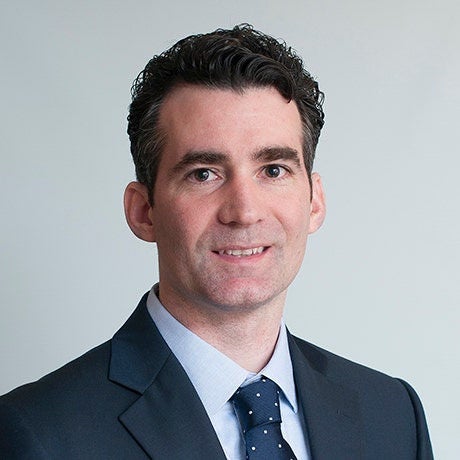
Aaron Aguirre, MD, PhD
Award-winning intervention
In August, Aguirre and Rosenthal’s idea was recognized with the 2026 Rappaport Grand Challenge Award — Mass General Brigham’s most significant team science funding opportunity. This annual $3 million award, established as part of a gift from the Phyllis & Jerome Lyle Rappaport Foundation in 2024, is designed to assemble and support interdisciplinary teams of outstanding investigators to tackle the most pressing medical challenges patients face. Each year, an advisory board of volunteer scientific thought leaders from Mass General Brigham, academia, and industry selects a theme designed to drive a transformative change in healthcare. The theme for 2026 was “A Systems-Level View of Human Disease.”
“Their proposal had all the elements we look for,” says Robert E. Kingston, PhD, chief academic officer and senior vice president for research and education at Massachusetts General Hospital and co-chair of the Rappaport Grand Challenge Award advisory board. “It was innovative, exciting, and collaborative; built on strong preliminary findings and data; and has strong potential to make a significant impact for patients in the near-term.”
One of the most noteworthy elements of Aguirre and Rosenthal’s method is its broad applicability. Because the method is technology-based, it can be implemented at other hospitals and medical centers and used as a teaching tool. Members of the Rappaport Grand Challenge Award advisory board described the proposal as a “game changer” for its potential to help patients at Mass General Brigham and around the world.
“Drs. Aguirre and Rosenthal’s research has the capacity to help us understand why cardiac arrests occur in the hospital and, more importantly, how to prevent them,” says Phyllis Rappaport, co-founder and chair of the Rappaport Foundation. “This is exactly the type of work the Rappaport Grand Challenge Award was created to support. Their findings could save lives, prevent brain injuries, and spare patients lifelong complications.”

Eric Rosenthal, MD
About the award and the Rappaport Foundation
The Phyllis & Jerome Lyle Rappaport Foundation has been an ardent supporter of biomedical research at Mass General Brigham for 30 years. The Rappaport Grand Challenge Award was at the heart of the Rappaport Foundation’s $50 million gift in 2024.
The 2024 gift cemented the Rappaport Foundation’s legacy of support for talented scientists, honored the commitment of its late founder, Jerome Lyle Rappaport, known to many as Jerry, and positioned the Mass General Brigham research community for future success. By building on a proven model, the Rappaport Grand Challenge Award brings vital resources to healthcare’s most intractable problems.
“The Rappaport Grand Challenge Award highlights what makes Mass General Brigham so special,” says advisory board member Kathryn Rexrode, MD, MPH, chief academic officer at Brigham and Women’s Hospital. “Our scientific and medical expertise across the full breadth of specialties and research domains are unmatched, but cross-disciplinary collaboration is our true superpower.”