Romneys provide $10 million boost in race to cure neurologic diseases
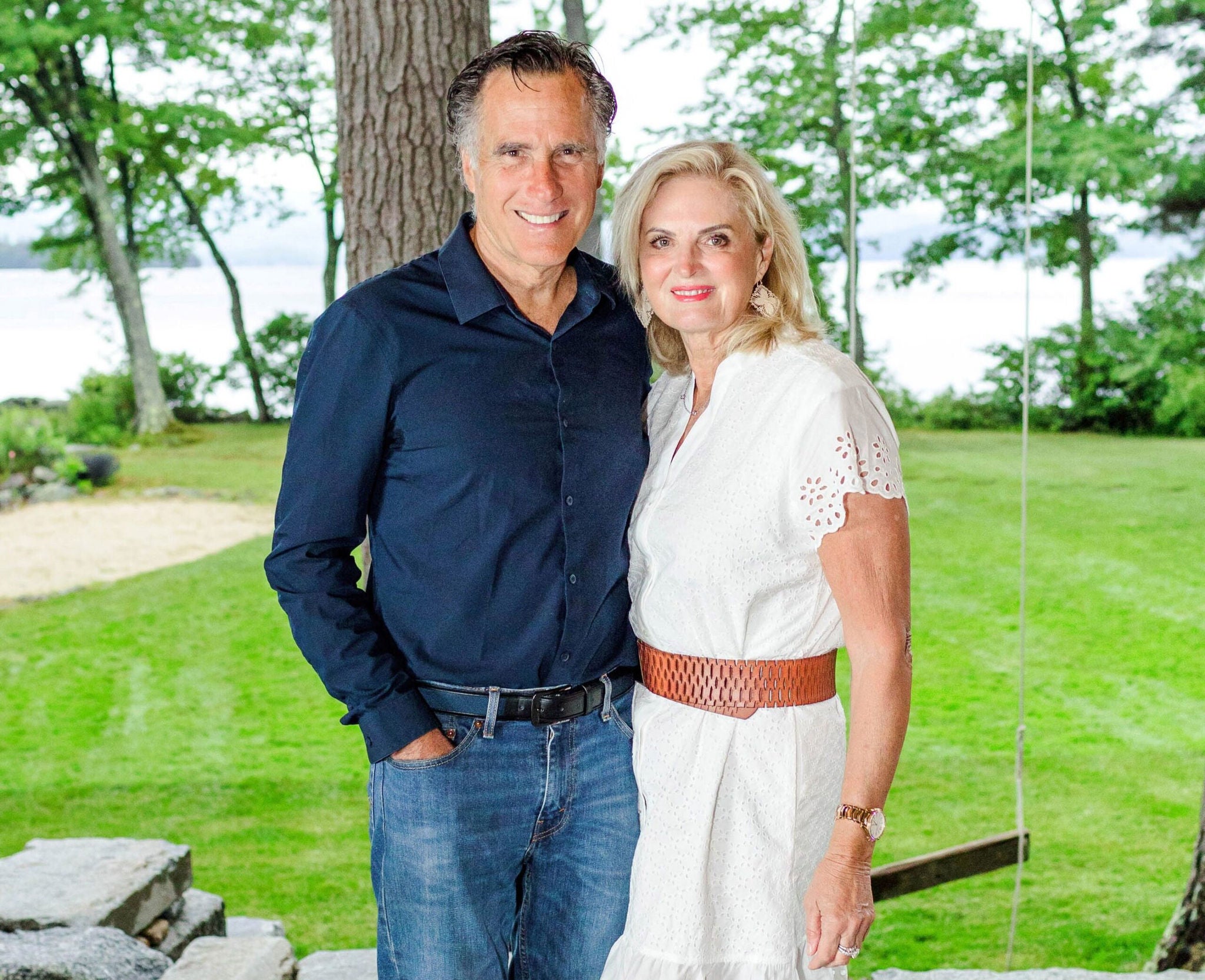
A landmark $10 million gift from Ann and Senator Mitt Romney has launched a $50 million fundraising initiative for the Ann Romney Center for Neurologic Diseases — an ambitious effort to accelerate treatments, preventions, and cures for complex neurologic diseases, which affect 1 out of every 2 people worldwide.
“At this unique moment, our researchers are showing more potential than ever before,” says Ann Romney, who was recently profiled in an issue of People Health about her journey with multiple sclerosis (MS) and her support and vision for the center. “With this initiative, we hope our children and their children will see cures we could never have imagined even 20 years ago.”
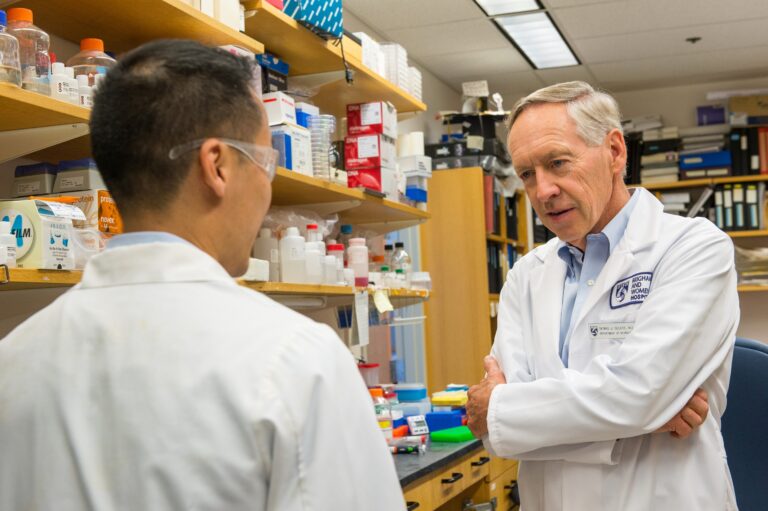
Dennis J. Selkoe, MD (right), consults with a researcher in the lab.
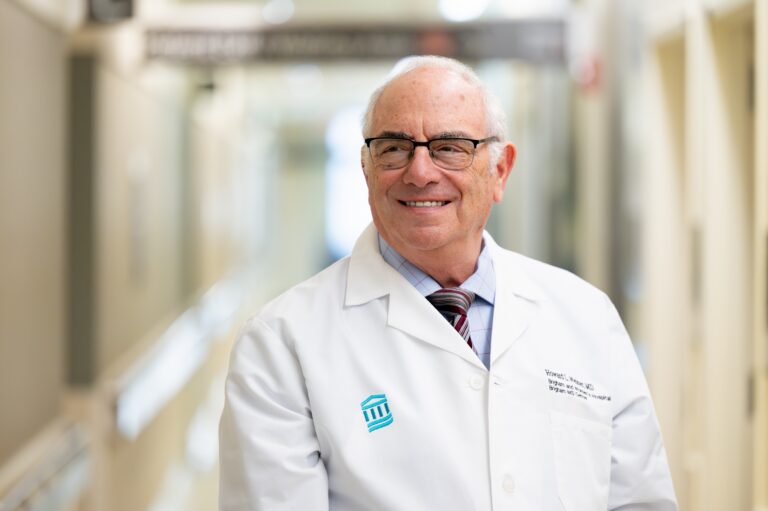
The largest single philanthropic commitment in the center’s history, the gift anchors a three-year fundraising initiative designed to cement the center’s position at the vanguard of neurologic research. For the co-directors of the center — Howard L. Weiner, MD, and Dennis J. Selkoe, MD — the gift celebrates more than a decade of remarkable scientific progress and the enduring power of philanthropic partnership.
The center was born from a conviction that fighting brain disease requires a fundamentally different approach. The center pioneered an interdisciplinary model, applying discoveries made in one disease to investigations in others. Today, more than 350 affiliated researchers and staff from over 30 laboratories work under that shared vision, publishing over 130 peer-reviewed articles each year.
The Ann Romney Center’s scientists have made fundamental discoveries underpinning the amyloid hypothesis of Alzheimer’s disease, directly contributing to the first approved treatments that slow the disease’s progression. Researchers have developed a nasal spray showing early promise as a treatment for progressive MS, with work now underway to expand its potential to Alzheimer’s disease, Parkinson’s disease, amyotrophic lateral sclerosis (ALS), and even major depression. Teams are probing the gut-brain connection to develop microbiome-based therapies, harnessing patients’ own stem cells to identify personalized treatments, and pioneering advanced brain imaging and biomarker discovery techniques that could detect disease years before symptoms appear. Today, the Neuroscience Institute’s Alzheimer’s Therapeutics Program is treating its 1,000th patient with these therapies.
“We are at an extraordinary inflection point,” says Dr. Selkoe. “The science is advancing faster than at any point in my career. What we need now are the resources to match that momentum — to hire exceptional talent, to run the trials, to follow the science wherever it leads. This gift makes that possible.”